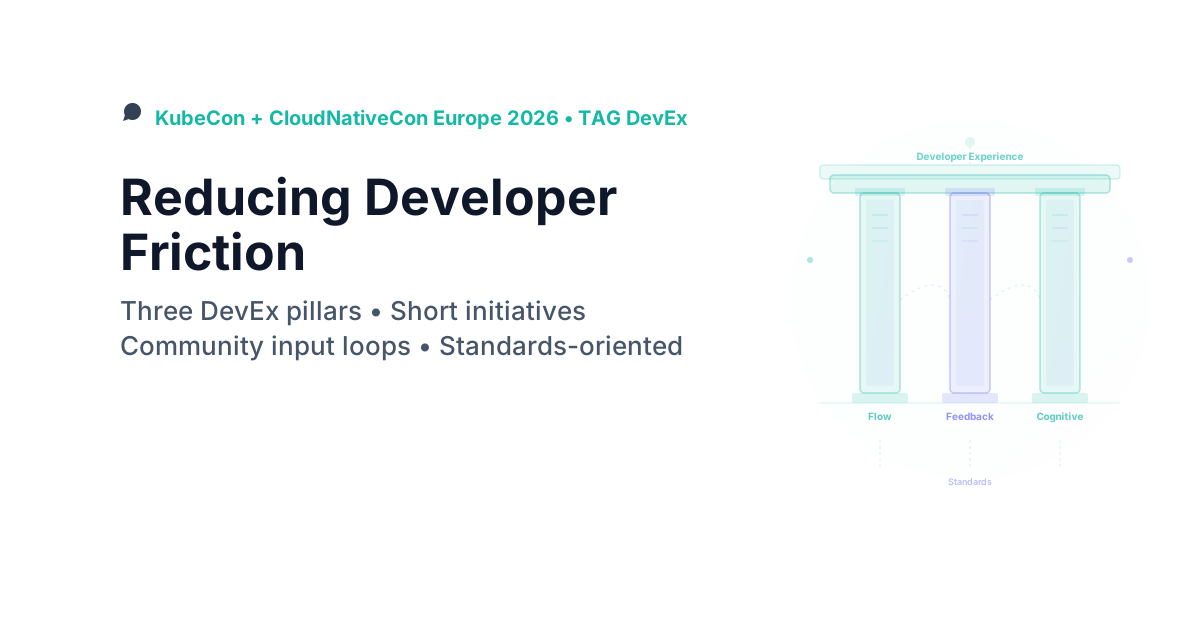
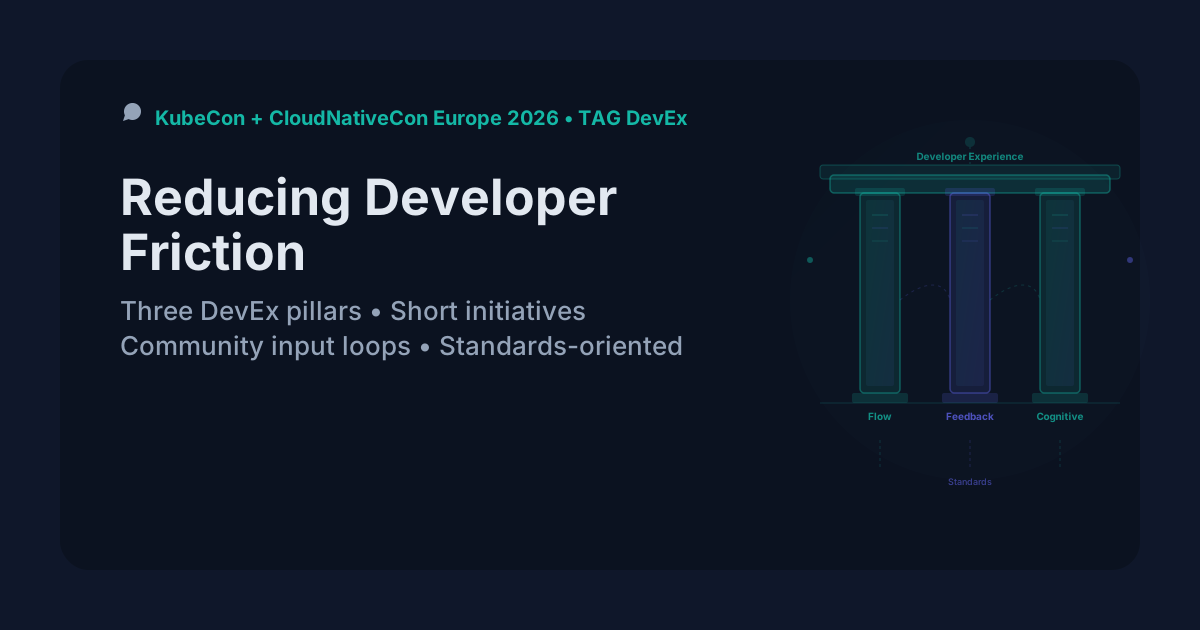
TAG DevEx in action: a practical model for reducing developer friction
The TAG Developer Experience panel at KubeCon EU 2026 was valuable because it translated DevEx from broad rhetoric into a concrete execution model.
Instead of treating DevEx as a permanent umbrella topic, the group is running short, scoped initiatives with clear outputs and explicit community input channels.
The visual map
The three-pillar DevEx framing
TAG DevEx described developer experience across three connected pillars:
- developer tooling (inner loop and outer loop)
- application runtime realities (communication patterns, topology, tenancy)
- platform enablement interfaces (golden paths, policies, paved roads)
That framing is useful because it stops teams from reducing DevEx to UI polish while ignoring runtime and platform constraints that create most daily friction.
Short initiatives with explicit scope beat open-ended DevEx programs
The TAG DevEx operating model — 3-6 month cycles, limited scope, clear deliverables, community input — is directly transferable to internal platform teams. Long-running "DevEx transformation" programs become fuzzy and hard to defund even when they stop delivering. Short cycles create accountability and ship things people can evaluate. Borrow this model for your next platform improvement initiative.
The initiative model is the main contribution
A standout idea from the session was not a new framework. It was the operating model itself.
Initiatives are framed as:
- short lifecycle (typically 3-6 months)
- limited, explicit scope
- clear deliverables
- cross-TAG and community input
This is a strong pattern for platform organizations too. Long-running "DevEx transformation" programs often become fuzzy. Short cycles with explicit outputs create accountability and momentum.
What is active now
The panel highlighted several active or emerging initiative lines.
Security and compliance through a DevEx lens
The objective is to collect real examples where security guidance either reduced friction or increased it, then use that evidence to improve practical adoption patterns.
This is the right approach: measure both security outcome and workflow impact.
AI-assisted development in CNCF projects
This initiative is collecting maintainers' and contributors' real-world use patterns, pain points, and value areas for AI-assisted SDLC.
The expected artifact is practical guidance that helps teams adopt AI with fewer blind spots.
Application dependency specification
The dependency initiative targets a common pain point between app and platform teams: unclear dependency contracts in development-to-deployment handoffs.
The team is exploring both runtime-observed and code-declared models rather than locking into one mechanism too early.
AI inner-loop experience (emerging)
There is also active interest in standardizing better local AI development experience, with open calls for contributors and leads.
Apply this: map your top DevEx pain points to the three pillars
Before your next platform roadmap session, map your top five developer friction points to the three pillars: developer tooling, application runtime realities, and platform enablement interfaces. Most teams will find their friction clusters in one or two pillars — that tells you where to focus. If everything lands in "platform enablement," your paved roads need work. If it's "developer tooling," the inner loop is the problem.
Why this matters for enterprise platform teams
The panel was framed in CNCF terms, but the model transfers directly to internal platform teams:
- define DevEx scope across tooling, runtime, and platform interface layers
- run short initiatives with concrete outputs
- gather practitioner evidence before drafting standards or policy
- close the loop from output back into next iteration
This is how teams avoid strategy theater and actually reduce friction.
Collecting friction stories before prescribing controls is not optional
The TAG DevEx security initiative explicitly collects evidence of where security guidance reduced friction vs increased it before drafting any recommendations. Internal platform teams frequently skip this step — they know what the platform should do and build it without checking whether it matches how developers actually work. Controls prescribed without evidence of the problem they solve create the friction they're meant to prevent.
Immediate actions you can take
- map your top five DevEx pain points to the three-pillar model
- spin up one 90-day initiative with named owners and measurable outputs
- collect friction stories from developers before prescribing new controls
- evaluate security and AI initiatives by both outcome quality and developer cost
- document app-platform dependency expectations as explicit contracts
References
- KubeCon EU 2026 event notes
- The Next Chapter of Developer Experience: TAG DevEx in Action notes
- Platform engineering is a sociotechnical problem
- KubeCon EU 2026 made one thing clear: platform teams are product teams
Frequently asked questions
Where can I watch the TAG DevEx KubeCon session?
The panel is on the CNCF YouTube channel. Search "TAG Developer Experience KubeCon EU 2026" or "Next Chapter Developer Experience TAG DevEx". The CNCF TAG DevEx also has a public GitHub repository with initiative documentation and meeting notes.
How does the AI-assisted development initiative connect to what my team is building?
TAG DevEx is collecting real-world patterns from CNCF maintainers: where AI-assisted development creates genuine value, where it introduces new friction, and what guidance helps teams adopt it safely. If your platform team is evaluating AI tooling for developers, this initiative's output will be more useful than vendor positioning — it's practitioner evidence from open-source contributors who have no reason to oversell.
How long does a TAG DevEx initiative typically take?
3-6 months from kick-off to published output. The security and compliance initiative was scoped to evidence collection and pattern synthesis — not a new standard. The AI inner-loop initiative was in early formation at KubeCon. Shorter scopes produce more finished outputs; longer initiatives tend to drift. If you run similar initiatives internally, 90 days is a good maximum before reassessing scope.
Can enterprise teams contribute to TAG DevEx initiatives?
Yes — TAG DevEx is an open CNCF working group. Enterprise practitioners with real evidence of DevEx friction (or improvements) are exactly what the initiatives need. The security initiative specifically asked for examples from regulated environments where security requirements created developer friction. Check the CNCF TAG App Delivery and TAG DevEx GitHub repositories for how to get involved.
How does TAG DevEx relate to platform maturity models?
TAG DevEx produces guidance, not prescriptive maturity levels. The three-pillar framing (tooling, runtime, platform enablement) gives a vocabulary for describing DevEx problems without imposing a single measurement framework. If you want a maturity model, the CNCF Platform Engineering maturity model is the better reference — TAG DevEx focuses on reducing specific friction, not on rating platform completeness.