KubeCon EU 2026 made one thing clear: platform teams are product teams
KubeCon EU 2026 made one thing clear: platform teams are product teams
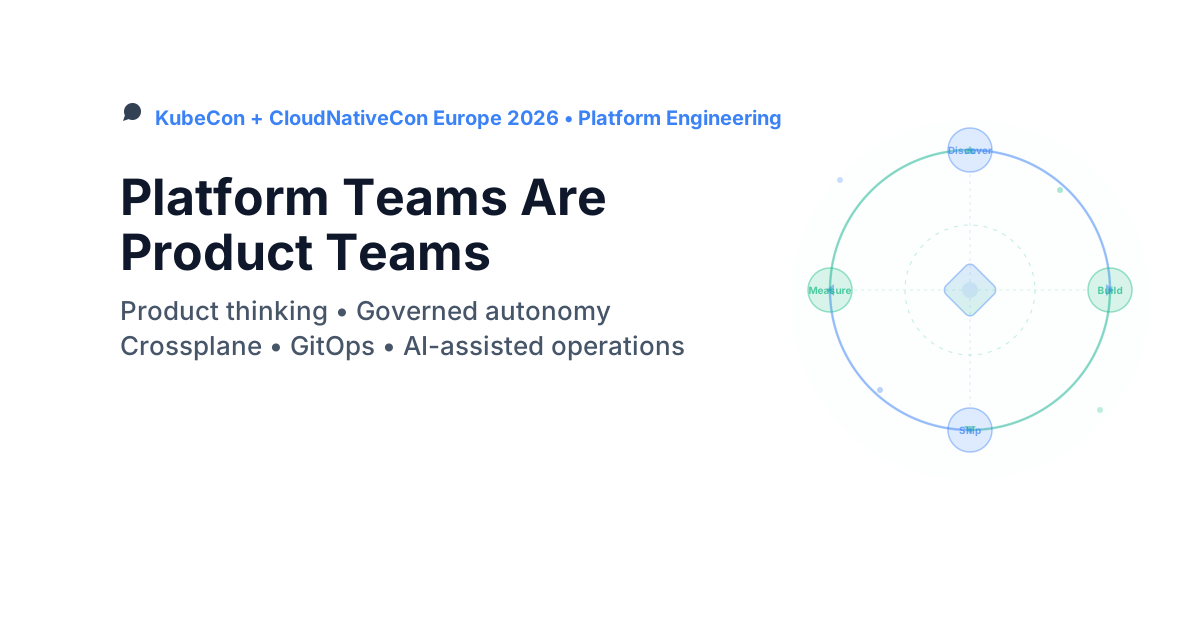
After a few days of platform talks, GitOps talks, keynote sessions, and the usual AI noise, one thread kept showing up more clearly than the rest: the interesting teams were no longer talking about platforms as internal tooling projects. They were talking about them as products.
That sounds obvious, but most internal platforms still are not run that way.
They are often built with product-level ambition, but measured with project-level logic:
- did we ship the thing?
- did we hit the milestone?
- did the backlog move?
KubeCon EU 2026 was useful because several talks exposed why that is no longer enough.
Platform bypasses are product research, not compliance failures
When teams keep building side paths, the instinct is to tighten the guardrails. Sony's experience shows that's usually the wrong response. Before adding restrictions, run the diagnosis: which need isn't being met? What's too rigid, too slow, or too opaque? Bypasses are the most honest feedback a platform team gets — treat them as free user research.
The pattern that kept repeating
The best sessions from different angles all converged on the same shape of problem.
Sony: good architecture, poor fit
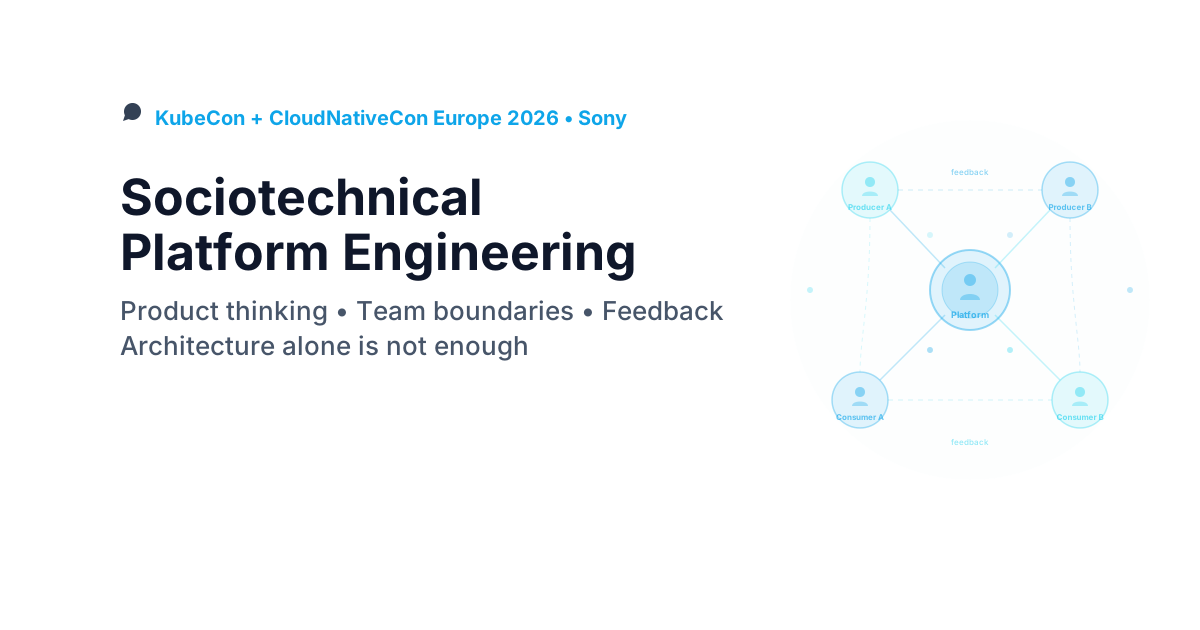
Sony Interactive Entertainment described the moment many platform teams reach sooner or later: the engineering is solid, the abstractions are in place, golden paths exist, but teams still ask for exceptions, work around the platform, or bypass it entirely.
The important point was not that the platform was weak. It was that technical maturity did not guarantee user fit.
That is a product problem.
RBI: risk is not evenly distributed
Raiffeisen Bank International showed the operational version of the same issue. GitOps gave them structure, but not every change fit the same control model. Infrastructure promotions, Crossplane migrations, and multi-layer cloud changes carry very different failure modes from ordinary application rollouts.
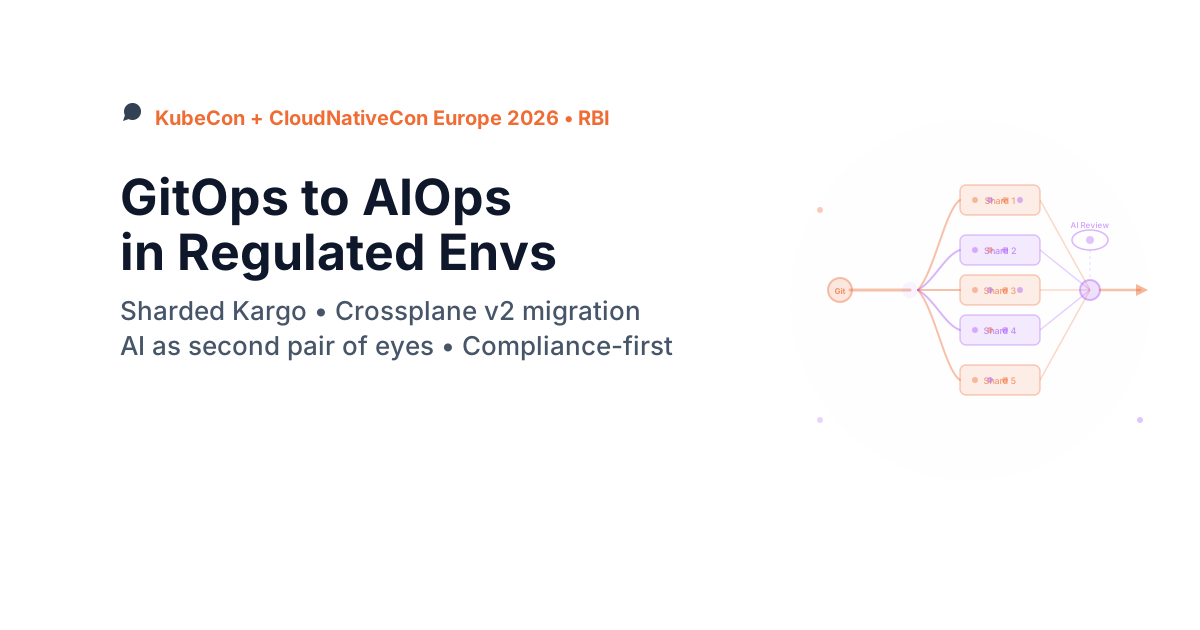
That forced them to distinguish between visibility and execution, use sharded Kargo, and add AI as a review and diagnosis layer instead of pretending the whole system could be treated as one simple pipeline.
That is also a product problem, because the platform has to fit the real risk profile of the users and workloads it serves.
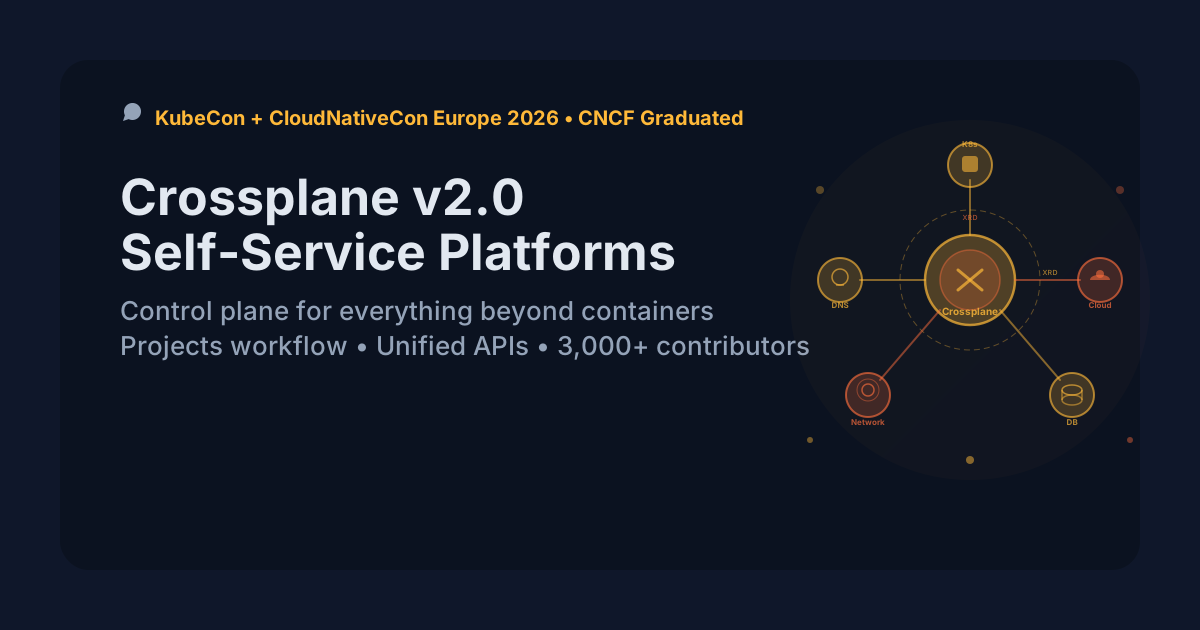
Crossplane: APIs instead of ticket queues
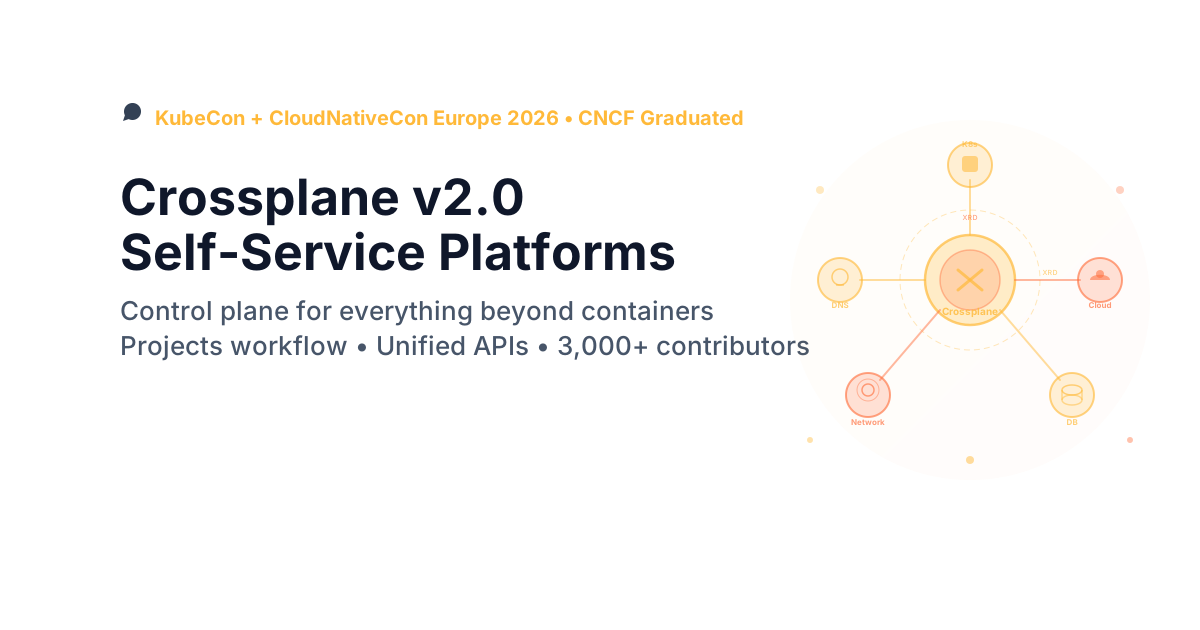
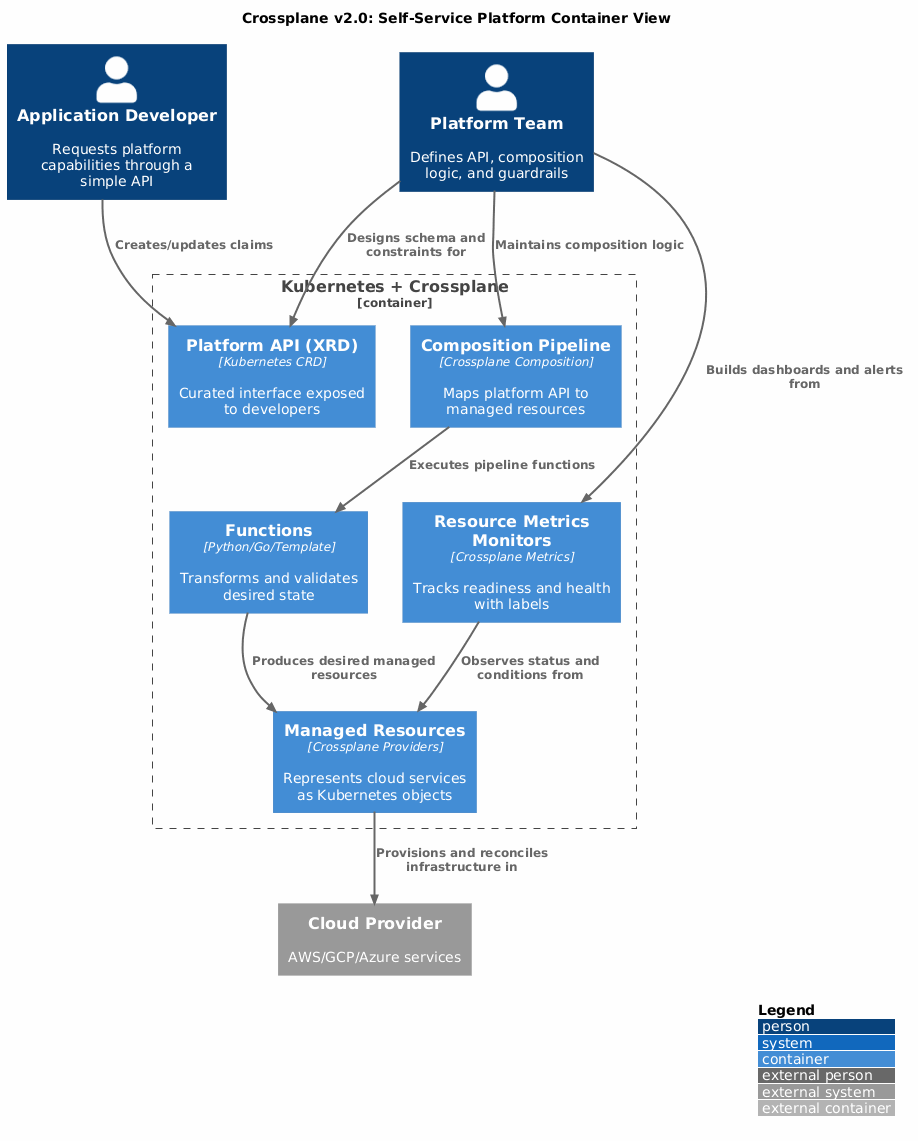
The Crossplane v2 talk pushed the platform API story forward in a very practical way. Platform teams are trying to move from manual request handling towards stable, constrained, self-service APIs. That only works if the experience is coherent enough that developers actually want to use it.
Again, the technology is only half of the answer. The rest is packaging, usability, trust, and operational clarity.
The keynote thread: sovereignty, sustainability, and governed autonomy
Even the keynote material reinforced the same direction. Whether the subject was digital sovereignty, ESA mission systems, production agents, or energy infrastructure, the message was similar: cloud native platforms are now operating systems of consequence. That means they need stronger boundaries, clearer operating models, and more explicit governance.
Once the stakes rise, product thinking becomes unavoidable.
What this means in practice
If platform teams are product teams, then the unit of success changes.
It stops being:
- number of features shipped
- number of platform components built
- number of abstractions introduced
And becomes much closer to:
- how quickly teams get value
- whether they trust the default path
- whether adoption is growing or bypasses are growing
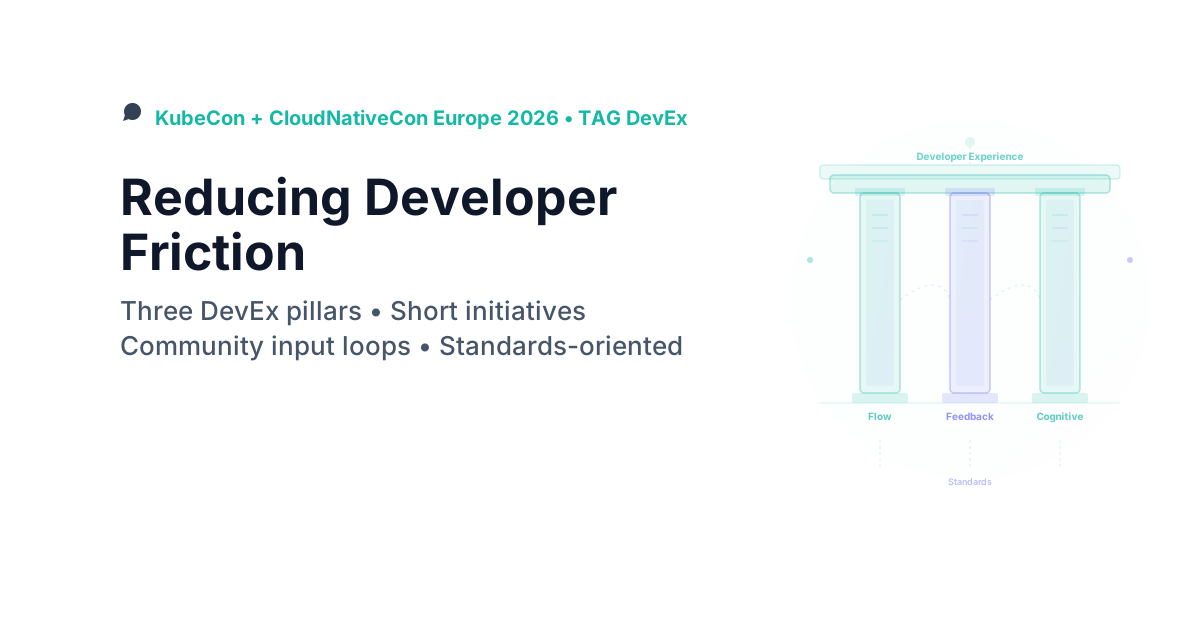
- whether the platform reduces cognitive load or creates more of it
- whether the risk model matches the reality of the environment
That change is bigger than a wording tweak. It affects architecture, organisation, and delivery.
Apply this: add product signals to your next platform review
Most platform teams review reliability and delivery throughput. Few review adoption, time to first value, workaround volume, or developer satisfaction. Add one product metric to your next review cycle. The easiest starting point: count how many tickets or exceptions were raised against your platform last quarter and ask whether the volume went up or down.
Four ideas that stood out
1. Platform bypasses are feedback
This came through most clearly in the Sony talk.
If teams keep requesting direct access, special handling, or custom deployment paths, the easy response is to treat that as a compliance issue.
Sometimes it is. But often it is product feedback:
- the abstraction is too narrow
- the path is too slow
- the capability is too opaque
- the platform does not match the team's operating reality
That does not mean every exception should become a feature. It does mean the behaviour is worth studying before dismissing it.
2. Risk needs different execution paths
RBI's sharded Kargo model was a strong reminder that not all promotions should share the same assumptions.
Application deployments, infrastructure changes, and resource migrations need different controls, different rollback expectations, and sometimes different execution topologies.
This is product design at the operational layer. You are shaping the control model around actual user risk, not around tool convenience.
3. APIs are not enough without experience
Crossplane gives platform teams better machinery for building internal APIs. That matters. But an API is not automatically a product.
If the ownership is unclear, the feedback loop is weak, or the adoption cost is too high, you still end up with a well-engineered thing that users tolerate rather than value.
4. AI is becoming a platform concern, not a side experiment
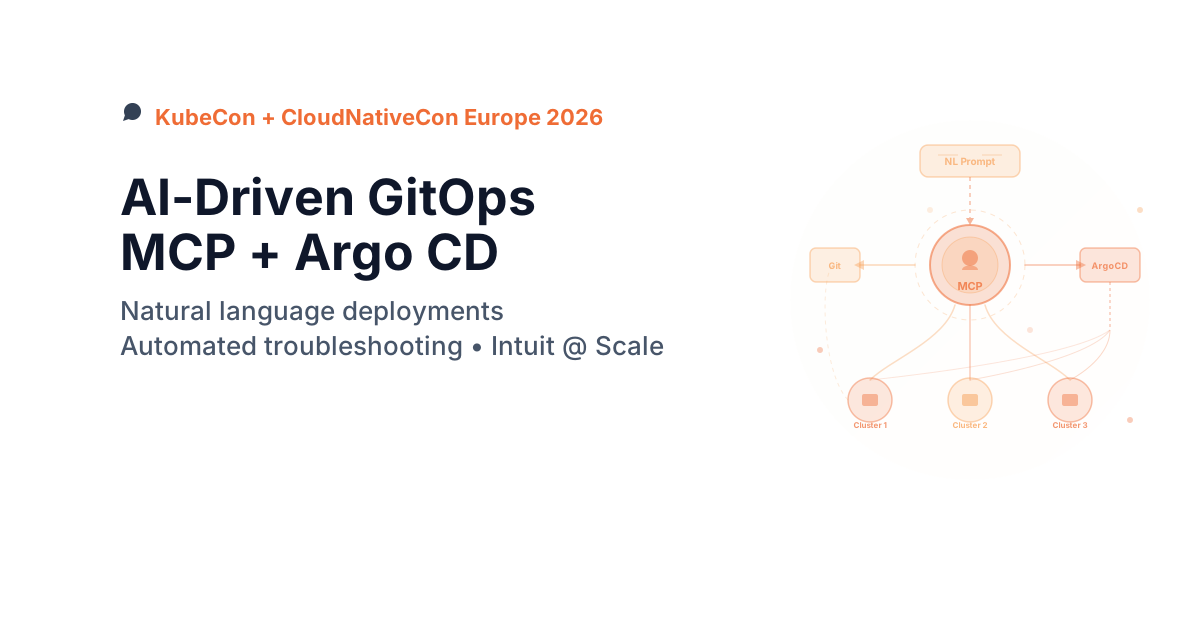
Several sessions made this point indirectly. AI is moving into support workflows, operations, review loops, and troubleshooting. That means platform teams will increasingly be asked to provide governed ways of using it.
The more credible talks did not frame AI as a replacement for engineering control. They used it to reduce toil, improve diagnosis, and surface risk earlier.
That is probably the right default.
Measuring delivery is not the same as measuring usefulness
You can have a healthy sprint velocity and a platform that developers actively avoid. Delivery metrics — features shipped, backlog movement, milestone hits — tell you whether you shipped something. They don't tell you whether anyone wanted it in the form you shipped it. Sony's shift was adding adoption, satisfaction, and workaround counts alongside throughput. That's what caught the mismatch.
The sociotechnical part matters more than most teams admit
This was the real connective tissue between the best talks.
Platform problems are rarely only technical after a certain scale. They are shaped by:
- team boundaries
- hand-offs
- approval paths
- time zones
- ownership clarity
- operational incentives
- what gets measured
Sony said this most directly, but the same pattern showed up elsewhere. If the platform architecture evolves while the team interaction model and feedback model stay stuck, the platform will eventually feel worse than it looks.
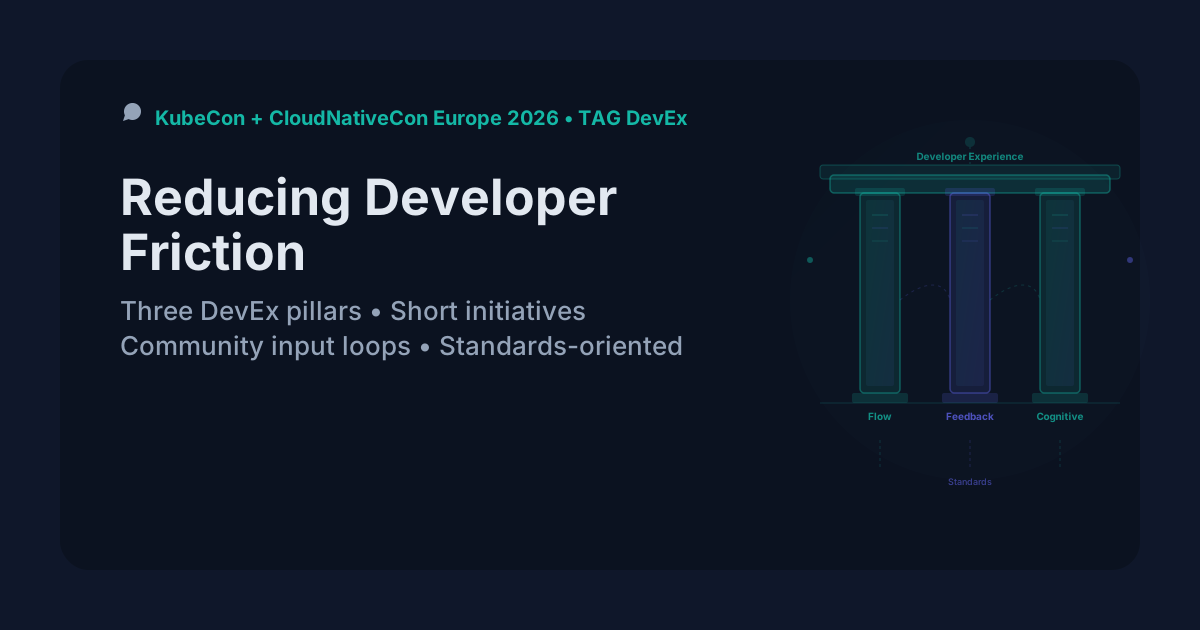
That is why the strongest teams are now working across three layers at once:
- technical architecture
- interaction model between teams
- feedback loops and success signals
That is a much better definition of platform engineering than just "build a control plane".
What I would actually do next
If I were taking one practical action plan out of these talks, it would be this.
1. Audit where people bypass your platform
Do not start with blame. Start with diagnosis.
Which capability is missing? Which path is too slow? Which abstraction is overfitted to the provider's view?
2. Split risk classes in your promotion model
If application, infrastructure, and migration changes still share the same assumptions, revisit that now.
3. Add product signals to platform reviews
Look beyond reliability and delivery throughput. Add:
- adoption
- time to value
- satisfaction
- workarounds
- exception volume
4. Raise the definition of done
Do not stop at shipped. Stop at trusted, usable, documented, and adopted.
5. Use AI where feedback is fast and accountability is clear
Start with support, diagnosis, review, and guardrails. Earn the right to automate more.
The bigger takeaway
KubeCon EU 2026 did not convince me that platform engineering needs more tools.
It convinced me that many platform teams need a sharper model of what they are actually building.
If the platform is a product, then:
- your users are real users
- bypasses are signals
- interfaces are part of the product
- risk controls are part of the product
- documentation and support are part of the product
- adoption matters as much as architecture
That sounds more demanding, because it is. But it is also more honest.
And at this point, it is probably the only model that scales.
Related posts
- From GitOps to AIOps in regulated environments
- Platform engineering is a sociotechnical problem
- Building self-service platforms with Crossplane v2.0
- KubeCon EU 2026: what actually mattered
Frequently asked questions
Where can I find the KubeCon session recordings for these talks?
All sessions are on the CNCF YouTube channel. Search for the Sony, RBI, and Crossplane talk titles — they typically appear 1-2 weeks after the event. The Sony session was presented by Hagen Eugenia.
How do you measure whether a platform is actually working as a product?
Sony's post-shift metrics are the reference: time to first value (how quickly does a new team get their first deployment?), adoption rate (what fraction of eligible teams use the platform vs build around it?), workaround volume (how many exceptions and custom paths exist?), and satisfaction (periodic surveys with one actionable question). Start with whichever is easiest to instrument and build from there.
Is 'platform teams are product teams' just rebranding the same work?
It's a genuine change in what you optimise for. A project-mode platform team optimises for shipping features on schedule. A product-mode platform team optimises for users relying on and trusting what was shipped. The difference shows up in what you do after a release: a project team moves to the next milestone; a product team instruments adoption, gathers feedback, and iterates. Most internal platforms need the latter.
What's the minimum viable product signal to add if you're starting from zero?
Count platform bypasses. Every exception request, direct-access ticket, or custom deployment path is a bypass. Track the count sprint-over-sprint. If it's going up while you're shipping features, you're building for the platform's needs, not the user's. That single metric will surface the most important product gaps faster than any survey.
How does the 'governed autonomy' theme connect to platform product thinking?
Governed autonomy is the technical implementation of product thinking at the platform layer. When a platform team designs explicit decision tiers, approval gates, and self-service paths with policy guardrails, they're making product decisions about what users can do safely without asking for help. Every autonomous action that doesn't require a ticket is the platform working as a product. Every ticket is a gap.